About
About Us
The Australian Wudang Sword Academy is a traditional martial arts club, primarily concerned with training Wudang Sword Arts. As part of this, we follow both the living tradition passed down to our instructors, and the period manuals detailing the techniques and training methods.
The primary weapon of Wudang Sword is the Jian (Hanzi: 剑, Pinyin: Jiàn), a single handed, double-edged straight sword. The particular variant we train with was in use from the Ming Dynasty (1368) through to the early Republican Era (1930s).
At the Academy, we ensure that our training is realistic, through sparring, in full protective gear, with sparring safe steel jian.
Principles of Wudang Sword
Wudang Sword uses delicate techniques along with lightning fast movements. Wudang sword goes from slow to fast and soft to hard in an instant. Attacks can be straight-line or circular. Low postures are utilized along with high jumps in the air. It is this combination that makes Wudang Sword one of the most famous and sought after sword arts in China’s history.
A common description of how this is applied in practice, is the saying: “Bagua Steps, Taiji Waist, Xingyi Hands”. This saying is referring to how Wudang Sword utilises fast and stable footwork, the hips and waist, through the body’s core to provide structure and power, combined with the ability to strike quick and hard.
The Wudang Sword Arts we teach utilise the 13 sword methods of Li Jinglin, as described in “The Major Methods of Wudang Sword” by Huang Yuan-xiao, each of which encompasses the above principles.
Instructors
Aidan (Chinese Name: 皑丹)
Aidan is a lifelong martial artist, starting as a young child with Judo at the age of 6. With over 25 years experience in Taiji and Kung Fu, he has trained with the jian for over 20 years. For the last 15 years, he has specialised in training with the jian. His primary sword instructors are the current 13th generation Gatekeepers of Wudang Dan Pai. In addition to his formal teachers, he has continued to learn techniques, taolu, and refinements from his martial brothers and sisters, and friends.
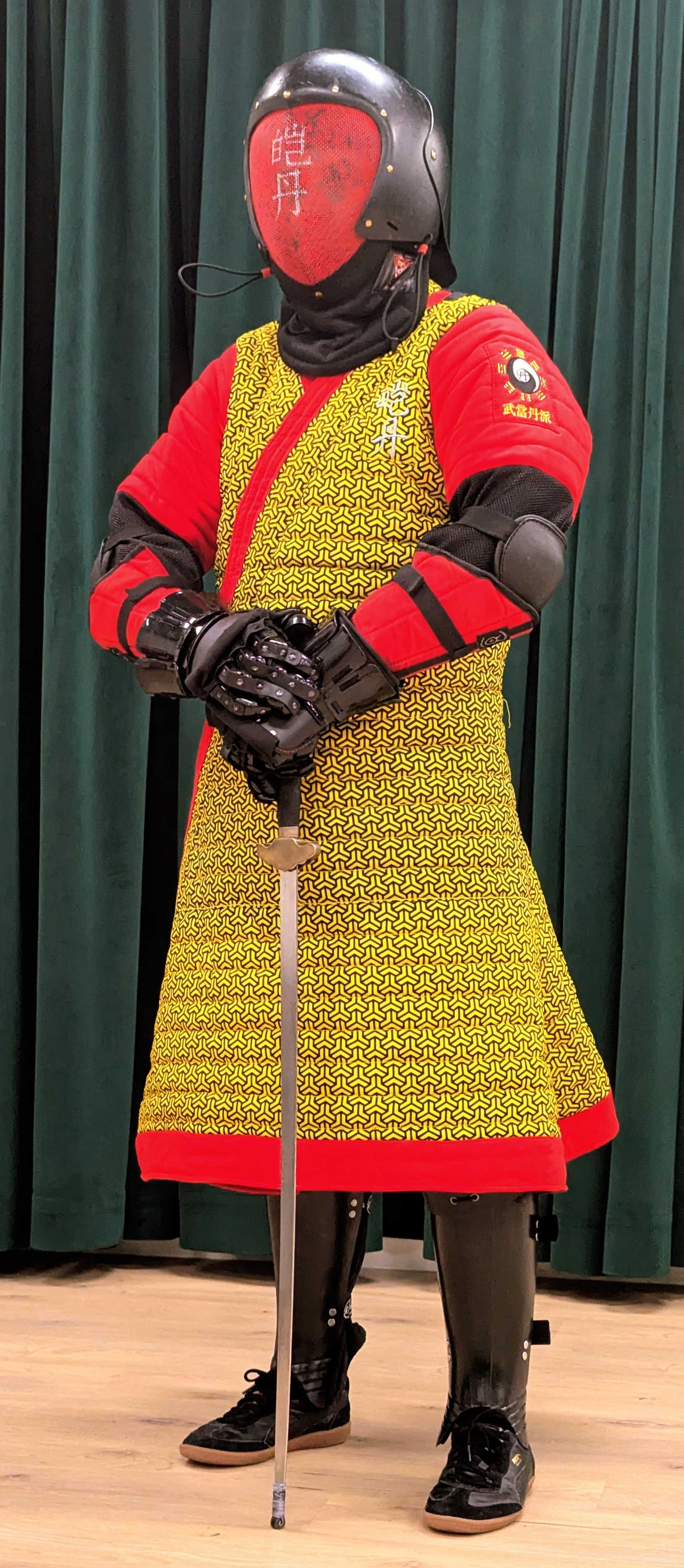
In his day job, he is a Mechatronic Engineer, with Bachelor of Engineering (Mechatronics), Master of Research (Health Informatics), and Master of Space Operations degrees. Aidan's has experience designing and building spacecraft, mission control systems for satellites, and space situational awareness analytics and mission software. With his engineering and scientific background, Aidan utilises an engineering and evidence based approach to breaking down, defining, and describing the techniques used in Wudang Sword to allow for a clear and precise way to explain and understand each technique and movement.
Lineage
14th Generation Wudang Dan Pai
- Student of Dr Lu Mei-hui (呂美惠) and Master Chang Wu Na (張悟納) of Wudang Dan Pai
Yang style Taijijian
- Student of Master William Ho (Retired)
Guest Instructors
At the Academy, we often invite instructors from other schools and lineages to teach seminars, workshops, and short courses to give further bredth and depth to students. We firmly believe that diversity of thought and experience leads to better outcomes in training and life.
Wudang Sword Lineage
The Wudang Sword lineage taught at the Academy is depicted in the chart below.
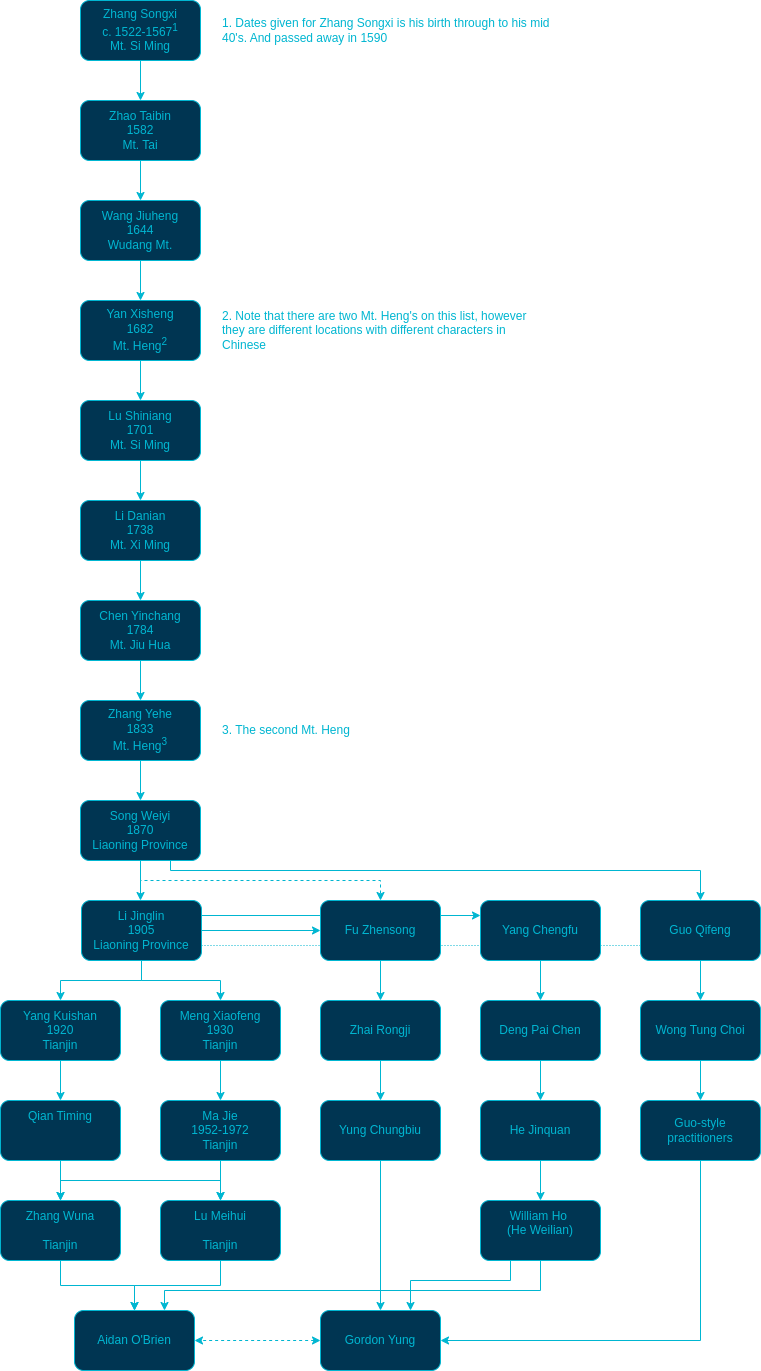
Tracing the lineage back to the Ming Dynasty, with the first generation, Zhang Songxi. The first eight generations were ordained Daoists, with Song Weiyi (9th Generation) being the first lay-person to be transmitted the techniques.
Later, Song Weiyi met Li Jinglin, and others, passing along the sword techniques. In the Republican Era, Li Jinglin took a large number of disciples in order to ensure the sword art survived the transition to the modern world. At the same time, Li Jinglin established a sword team, to continue developing Wudang Sword. The captain of this sword team was Fu Zhensong, who was a well known Bagua master.
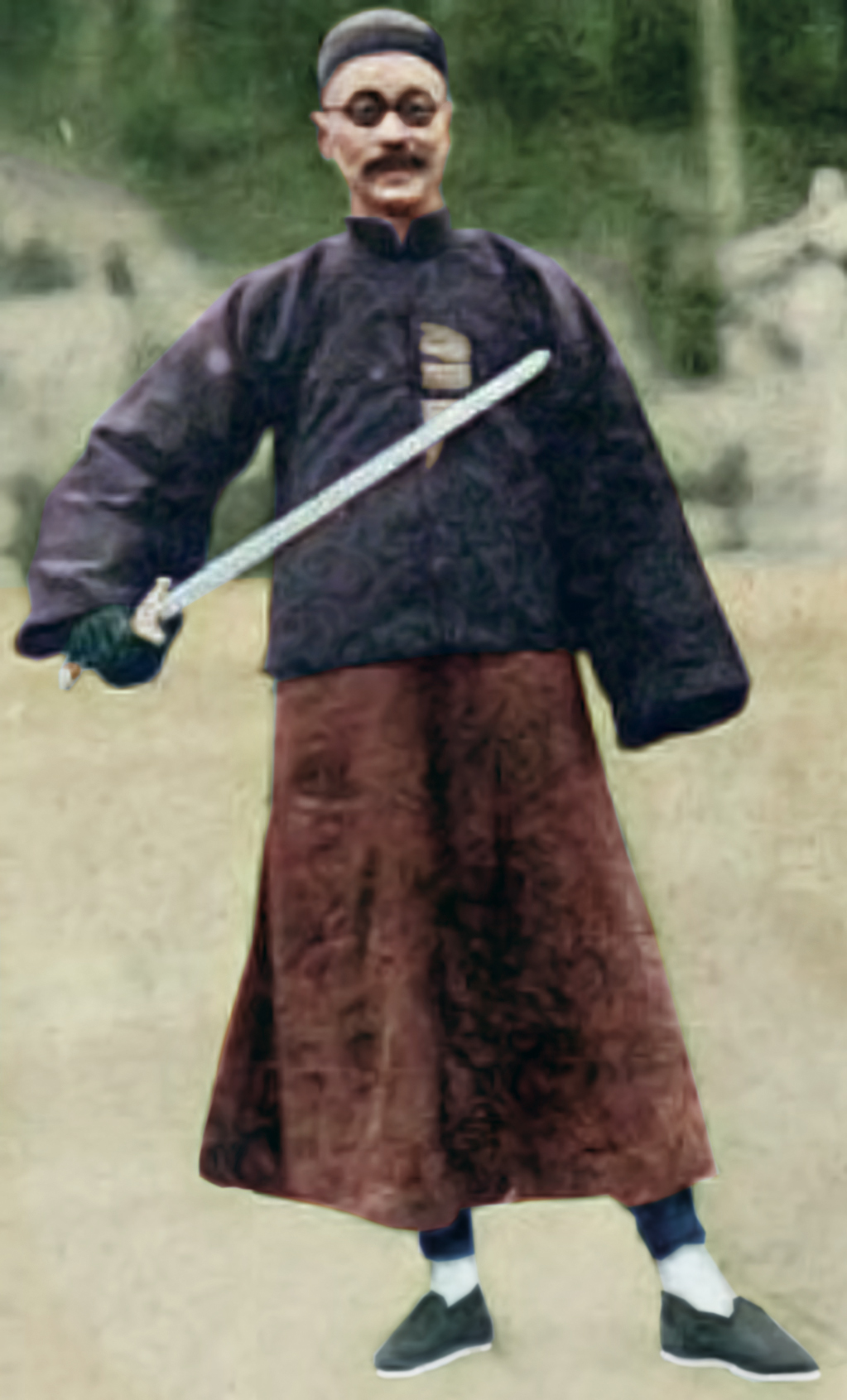
This sword team trained for three hours daily, with the last hour of training being sparring. This regular sparring resulted in the creation of the Wudang Duijian Taolu, made up of techniques which were regular shown to be effective in the free sparring sessions.